Municipalities today operate at the intersection of climate risks, demographic change, digital disruption, and declining trust in institutions. These pressures are reshaping what citizens expect from public institutions, shifting attention from efficient service delivery toward a broader responsibility for shaping sustainable and inclusive futures. In this context, municipalities are called not only to administer services but to act as stewards of shared futures, balancing operational discipline with long-term resilience and community trust. An expanded concept of value supports this role. Economic, social, cultural, political, and ecological dimensions together provide a richer lens for guiding decisions and investments. Approaches such as participatory budgeting, nature-based solutions, cultural design methods, and Local Digital Twins help translate these value dimensions into practical action, enabling more coherent and future-oriented strategies. This learning unit introduces an integrated framework for understanding and creating public value across multiple dimensions. Given the breadth of the topic, facilitators may focus on specific value areas most relevant to their context. The unit equips learners with concepts and tools to align municipal strategies with expanded notions of prosperity that are equitable, resilient, and meaningful to citizens.
T4R - Learning journey
Learning with Microlearning Units
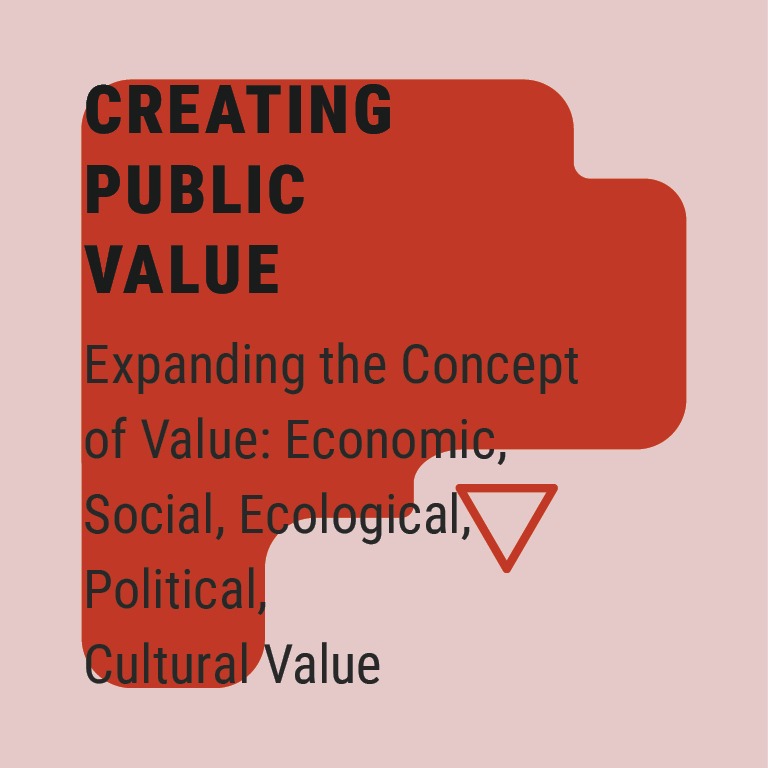
Expanding the Concept of Value: Economic, Social, Ecological, Cultural Value
FRAMEWORK:
EDUCATION
MODULE:
Creating Public Value
EQF 5
EDU-203
| EDU-200 | second loop |
|---|---|
| Expanding the Concept of Value: Economic, Social, Ecological, Cultural Value | Learner compares different value dimensions. Learner applies selected frameworks to analyse municipal policies and projects. Learner reflects on tensions and trade-offs to propose well-founded ways of integrating economic, social, cultural, political and ecological value into local decision-making. |